𐄀 Technology Connection to Future


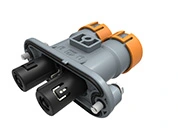
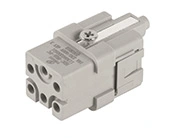
The rapid modernization of global railway infrastructure demands unprecedented levels of safety, efficiency, and data throughput. In multi-car train sets, such as high-speed Electrical Multiple Units (EMUs), heavy-duty freight trains, and urban subways, cars must operate as a unified, synchronized system. The vital link enabling this synchronization is the heavy-duty electric coupler system.
As transit networks scale up automated operations and onboard digital architectures, the engineering pressure on vehicle-to-vehicle connections intensifies. Choosing and maintaining a premium electric coupler is no longer just a hardware consideration; it is a foundational pillar of modern transit safety and signal integrity. This comprehensive technical guide breaks down the core structural features, multi-signal integration capabilities, and essential maintenance protocols required for next-generation railway networks.
In the rail transport ecosystem, vehicles connect via mechanical hooks to pull load weights, but they rely on an electric coupler to transmit power and information. This specialized subsystem is an industrial plug-and-socket interconnection structure engineered specifically to withstand the brutal mechanical and environmental vibrations of rolling stock.
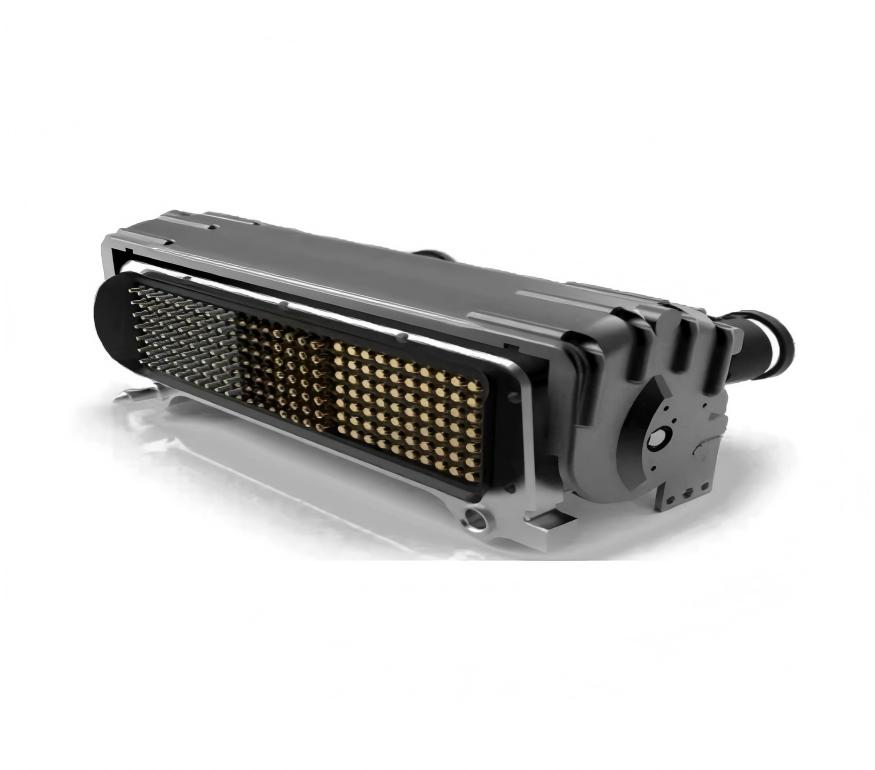
A standard industrial assembly consists of a flip assembly for automated protection, a heavy-duty protective shell assembly, a precision insulator assembly, a structured cable assembly, and robust rear installation accessories. The core electrical contacts inside use high-grade elastic end faces or specialized pinhole mechanisms. This exact configuration ensures that despite constant track jolts, high-speed turbulence, and lateral wind shearing, the electrical circuit remains firmly closed, preventing micro-interruptions that could trigger emergency braking or telemetry dropouts.

Historically, rail vehicles utilized separate, bulky lines to carry electrical current across car gaps. Modern aerodynamic rolling stock demands a streamlined approach. Today's advanced electric cable connectors couplers achieve extreme spatial efficiency by integrating multiple disparate signal types into a single, high-density contact block.
A single heavy-duty connection block can simultaneously manage and isolate three critical types of electrical transmission:
Power Supply: Delivering high-current utility power to passenger HVAC systems, interior lighting, and auxiliary sub-modules.
Vehicle Control: Carrying vital low-voltage control commands responsible for door operations, brake activation, and safety sensor telemetry.
Data Communication: Routing complex high-bandwidth signals for PIS (Passenger Information Systems), onboard CCTV security cameras, and automated train control diagnostics.
To accommodate varying rolling stock platforms—from tight, low-clearance light rail vehicles to massive double-decker passenger trains—manufacturers must offer extensive core-number options. Custom layouts allow engineers to isolate specific voltages within the same housing block by utilizing mixed-specification contact pins, mitigating the risks of electromagnetic interference (EMI) across adjacent circuits.
The explosive rise of digital rail technologies—such as autonomous driving, real-time cloud diagnostic streaming, and high-definition passenger Wi-Fi—has strained traditional serial bus architectures. Modern transit networks require full automotive-grade network routing capabilities right through the mechanical hitching point.
To future-proof new fleets and support rolling stock retrofit initiatives, next-generation electric cable connectors couplers can feature dedicated, shielded Ethernet modules. These components support stable network transmission speeds of 100Mbps up to 1000Mbps (Gigabit Ethernet).
These communication inserts feature robust internal shielding to eliminate crosstalk from surrounding high-voltage lines. Furthermore, they are built with a physical architecture that facilitates front-end maintenance, allowing depot technicians to check, test, or swap out communication contacts rapidly without completely dismantling the massive main frame of the mechanical connection block.
Selecting the proper density is essential to matching the vehicle’s electrical schematic. The table below outlines how diverse core pin layouts map to different rolling stock configurations:
| Core Configuration (Pin Count Options) | Primary Target Application | Supported Signal Integration Type |
|---|---|---|
| 32, 40, 46, 50 Cores | Light Rail Vehicles (LRV) & Shunting Locomotives | Low-voltage control signals and basic auxiliary power |
| 60, 70, 75, 89 Cores | Standard Urban Subway & Metro Passenger Cars | Mixed power distribution and onboard sensor lines |
| 105, 140, 164 Cores | Regional Express Trains & Intercity Commuter Rail | Complex control loops, HVAC power, and basic audio PIS |
| 196, 202 Cores & Higher | High-Speed EMUs & Heavy Digital Train Architectures | Total vehicle integration including Gigabit Ethernet modules |
Because these components operate on the exterior of the vehicle, they are directly exposed to harsh environmental factors, including rain, flying gravel, track debris, extreme temperature shifts, and heavy friction dust. Over thousands of operational kilometers, even the highest-grade electric coupler components undergo natural mechanical wear.
To prevent catastrophic transit delays caused by connection failure, operators must partner with suppliers that offer systematic, auditable maintenance workflows. A reliable industrial overhaul process should strictly follow these five vital technical phases:
Technical Status Confirmation: Technicians record the initial incoming wiring principles, structural dimensions, basic electrical performance metrics, and the baseline wear status of individual contact faces.
Disassembly and Deep Cleaning: The entire assembly is systematically broken down. Component surfaces are cleaned using specialized, non-corrosive solvents to remove built-up metallic track dust, restoring the shell’s original cosmetic and insulation baseline.
Core Element Repair or Replacement: Highly stressed sub-components—including elastomeric insulators, contact pins, and internal cable line bundles—are measured against strict wear tolerances. Any part exhibiting fatigue is repaired or replaced with factory-spec components.
Re-Assembly and Verification: The refreshed elements are put back together in the exact reverse sequence of disassembly. Technicians reference recorded checklists to confirm torque values and structural alignment.
Routine Performance Testing: Before returning to service, the unit must pass a rigorous battery of tests covering external physical dimensions, insulation resistance, high-voltage dielectric strength, and mechanical mating clearances to guarantee complete field compliance.
Navigating the complexities of high-density rail connections requires a component partner with deep manufacturing history and extensive field validation. Yonggui Electric Equipment Co., Ltd. (YGC) maintains a premier position in this highly specialized field, drawing on over ten years of dedicated development, manufacturing, and heavy maintenance experience.
YONGGUI has successfully executed numerous large-scale fleet maintenance and production projects, including servicing 21 urban rail transit lines and 8 distinct Chinese standard EMU projects. Highlighting its deep technical adaptability, YONGGUI's specialized service centers routinely inspect, overhaul, and provide replacement components for complex global systems originally built by overseas legacy suppliers such as Voith, Dellner, and Faiveley.
With a domestic market share exceeding 65% in this core segment, YONGGUI’s high-density electric couplers are currently deployed in hundreds of transit systems worldwide. Whether building zero-emission urban subway networks or deploying high-speed cross-country rail lines, engineering teams trust YONGGUI to deliver robust hardware that withstands the most demanding schedules. Discover our complete engineering capabilities and standard compliance certificates directly on our official homepage.
The modern electric coupler is an indispensable engineering asset that bridges the gap between mechanical force and electronic intelligence across rail transit systems. Ensuring your fleet uses optimized electric cable connectors couplers capable of integrating high-current power with high-speed Ethernet modules directly improves network uptime and reduces track maintenance costs. Partnering with an industry veteran like YONGGUI guarantees your transit network gains access to field-tested, globally compliant connectivity systems that keep passenger and freight fleets moving forward safely.
Whether you are managing an upcoming vehicle overhaul schedule or specifying high-density connection blocks for a new rolling stock platform, YONGGUI’s engineering team is ready to design a solution for your technical needs. Contact Our Engineers Today for custom pin-layout diagrams, technical data sheets, or a competitive quote.
The complete assembly typically features a protective flip lid, a heavy-duty outer shell, a high-grade insulator insert, an internal cable wire bundle, and specialized elastic end-face or pinhole contact pins.
Depending on the vehicle requirements, a single high-density connection block can carry over 200 independent pins, integrating high-current utility power, low-voltage control commands, and high-speed network communication lines.
Yes. YONGGUI's dedicated maintenance teams have extensive experience providing certified overhaul, reverse-engineering, and component replacement services for systems built by brands like Voith, Dellner, and Faiveley.
Modern YONGGUI rail connections can be fitted with specialized, shielded Ethernet modules that support reliable data transmission speeds of 100Mbps and 1000Mbps (Gigabit Ethernet).
Every refurbished unit must pass a strict testing workflow, which includes a visual inspection, insulation and electrical performance testing, mechanical mating checks, and a full assembly tolerance audit.


 English
  日本語
日本語  Deutsch
  ไทย
ไทย  русский
  العربية