𐄀 Technology Connection to Future


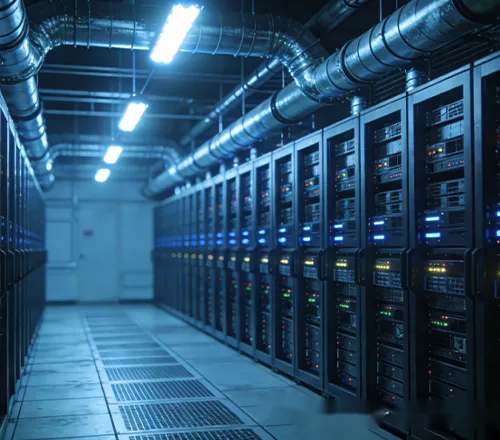
The global transition to renewable energy has accelerated the deployment of utility-scale Battery Energy Storage Systems (BESS). To maximize capacity while minimizing land footprint, modern BESS designs have shifted toward modular, high-density containerized architectures. These shipping-container-sized units house thousands of individual battery cells organized into tight, rack-mounted modules.
As system integrators scale up system voltages to 1500V DC and above to achieve higher efficiency, the underlying connectivity infrastructure faces unprecedented physical and electrical demands. Manually wiring thousands of high-voltage points inside a cramped container is slow, labor-intensive, and prone to human error. To overcome these bottlenecks, the industry relies on advanced connectors for energy storage, specifically heavy-duty blind-mate connection blocks. This practical guide breaks down how these advanced interconnect technologies optimize containerized BESS scalability, safety, and long-term maintenance.

In a traditional battery rack layout, technicians must manually plug power and signal cables into the front or rear of each battery module after sliding it into the slot. This manual process requires significant physical clearance, limits how tightly modules can be packed together, and creates significant wiring mess.
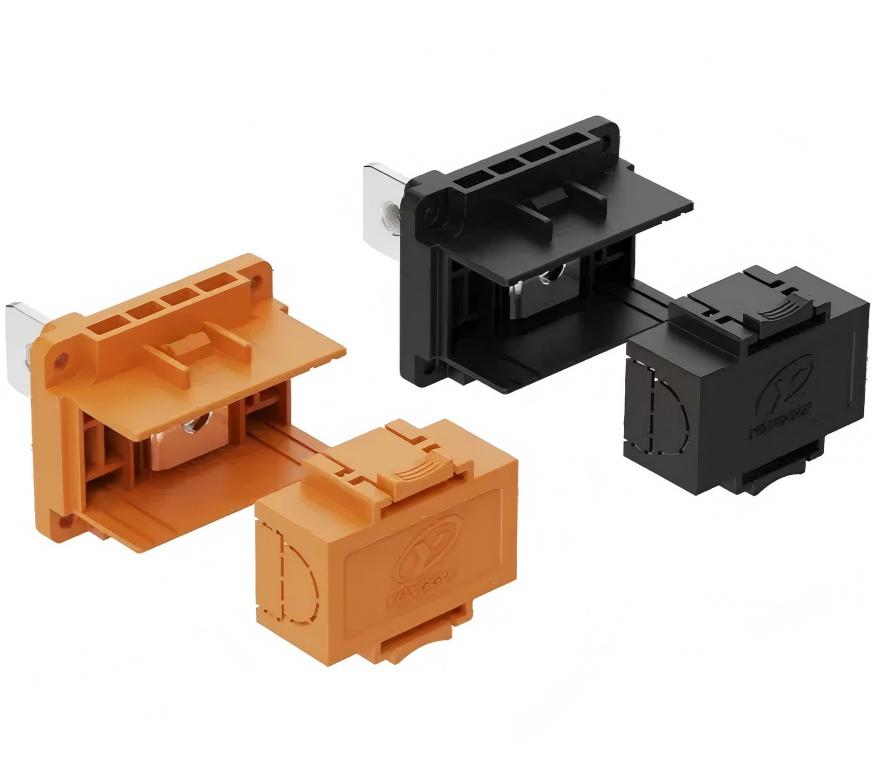
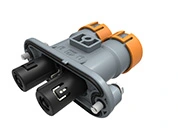
Blind-mate energy storage connectors change this workflow entirely by shifting the connection interface to the rear backplane of the rack. A blind-mate system consists of a floating plug installed on the back of the battery pack and a matching receptacle permanently mounted to the rear frame of the rack enclosure. When a technician slides a heavy battery pack into its slot, the connector automatically aligns and mates at the back of the rack without the technician needing to see or manually touch the joint.
To make this self-mating process work reliably, the hardware must accommodate real-world mechanical tolerances. High-quality blind-mate connection blocks feature built-in structural float. This allows the connector plug to shift slightly (typically up to 2.0 or 3.0 millimeters in both X and Y axes) during the insertion process. The connector shell features angled guiding entry cones that capture the misaligned plug and gently guide it into perfect alignment before the internal electrical pins make contact. This structural float eliminates the risk of crushing or breaking the delicate internal contact springs during high-force automated rack insertion.
Utility-scale containerized storage systems operate under some of the most brutal electrical profiles in the power industry. To reduce line losses and lower balance-of-system (BOS) costs, modern BESS configurations have pushed operational voltages up to 1500V DC, with continuous currents regularly exceeding 300A to 400A per rack string.
Managing these high-power profiles requires heavy-duty connectors for energy storage that feature superior thermal management. At these high current levels, electrical resistance at the contact interface follows an exponential heat-generation curve. Even a minor micro-ohm spike in resistance caused by mechanical vibration or loose physical contact can instantly cause localized thermal thermal spikes at 400A, risking terminal degradation or catastrophic failure within an enclosed battery container.
To eliminate this thermal risk, heavy-duty BESS connection blocks utilize premium-grade copper alloys engineered with high-performance silver plating. The internal contact architecture incorporates advanced multi-point contact bands—such as high-resiliency crown springs or louvered ribbons—that exert continuous, uniform physical pressure against the terminal pin. This robust engineering minimizes contact resistance to a fraction of a milliohm, preventing dangerous hotspots and ensuring the entire containerized system maintains tight thermal control during intensive charge and discharge cycles.
Every utility project manager must balance upfront component costs against long-term installation labor and system maintenance expenses. Choosing the wrong component class can either break your budget or lead to premature system failure in the field. The matrix below highlights the practical and technical differences between manual cable connections and automated backplane blind-mating:
| Operational Metric | Manual Front-Cabled Systems | Automated Backplane Blind-Mate Systems |
|---|---|---|
| Wiring Space Requirement | High (Requires wide front or rear maintenance aisles) | Minimal (Modules pack tightly directly against the backplane) |
| Module Installation Time | 10 to 15 minutes per pack (Manual plugging & torqueing) | Under 60 seconds (Slide-in, automatic click-mating) |
| Mis-Mating and Polarity Risk | High (Technicians can accidentally swap cables under fatigue) | Minimal (Physical rack tracks and asymmetry eliminate orientation errors) |
| Technician Safety Profile | Exposed (Technicians handle cables near live front panels) | Enclosed (All live high-voltage mating occurs behind the modules) |
| Volumetric Energy Density | Lower (Space sacrificed for manual hand clearances) | Maximum (Up to 20% to 30% more battery packs per container) |
Beyond the layout benefits, the choice of outer shell materials dictates field survivability. Because BESS containers are shipped worldwide and deployed in harsh conditions—ranging from frozen northern tundras to scorching desert solar fields—the outer connector bodies must use top-tier polymers like PA66 with high UV stabilization. This material specification ensures the housing does not become brittle or crack over a 15-to-20-year operational lifecycle, maintaining a strict UL94 V-0 flame-retardant safety profile.
The financial viability of a utility-scale battery deployment is heavily tied to its Levelized Cost of Storage (LCOS). LCOS measures the total cost of installing and maintaining a system divided by its lifetime energy throughput. Unexpected downtime or frequent maintenance site visits instantly degrade a project's profitability.
Over a 15-year operational lifecycle, individual battery packs will inevitably require removal for balancing, cell testing, or firmware troubleshooting. In a manually wired container, a technician must shut down the entire rack string, manually disconnect stiff, high-voltage cables, and re-torque them upon replacement. This process introduces huge room for error, such as improper torque settings that cause high resistance later. Heavy-duty blind-mate connectors for energy storage simplify this entirely. Because they are rated for hundreds of mechanical mating cycles, packs can be hot-swapped or slid out instantly. The rugged guide mechanisms ensure that the internal contact tolerances remain identical every single time a module is replaced, eliminating the maintenance variables that drive up operational costs.
For complex engineering teams developing multi-tiered green energy infrastructure, high-power components must interoperate seamlessly across diverse applications. Modern utility hubs, hybrid industrial parks, and smart containerized storage arrays often cross paths with high-voltage mobile systems.
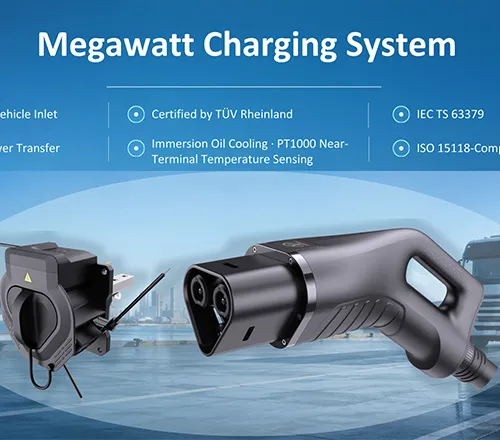
For instance, the massive high-voltage DC busbars collecting power from containerized rack strings often integrate directly with ultra-high-power megawatt charging systems (MCS) designed for heavy-duty electric trucks or regional electric trains. Ensuring that your stationary storage links, heavy-duty busbar terminal blocks, and transport-grade power couplers share harmonious engineering tolerances and metallurgical alignments prevents signal interference and power drops along the transmission grid. Reviewing our comprehensive heavy-duty industrial and green energy portfolios on our official homepage gives system specifiers a unified look at streamlining site-wide high-power architectures.
Achieving long-term system reliability requires partnering with a hardware manufacturer that possesses a proven, uncompromised history in heavy industrial engineering. Yonggui Electric Equipment Co., Ltd. (YGC) leverages decades of high-reliability manufacturing expertise to supply certified, zero-defect connectivity solutions to global tier-1 BESS integrators. YONGGUI’s specialized energy storage connectors are engineered with proprietary silver-plated terminal springs that optimize thermal dissipation under continuous maximum load. Every production lot undergoes rigorous lab testing to secure international certifications—including UL, TUV, and CE marks—ensuring top-tier protection for your infrastructure investments.
In summary, scaling up containerized BESS installations requires a deliberate shift toward heavy-duty, high-density connection methods. Transitioning from manual wiring to backplane blind-mating allows system integrators to maximize volumetric energy density, slash on-site installation labor costs, and eliminate human wiring errors. By prioritizing premium connectors for energy storage with ultra-low contact resistance and generous mechanical float tolerances, project managers can ensure absolute thermal safety and maximum container uptime. Partnering with an established manufacturing leader like YONGGUI guarantees your utility storage asset operates at peak efficiency for its entire design life.
Ready to Maximize Your Containerized BESS Efficiency?
Whether you are a system integrator finalizing a new 5MWh container rack layout or a project procurement manager sourcing heavy-duty, field-tested components, YONGGUI’s dedicated engineering team is ready to support you. Contact Our Engineers Today to request custom blind-mate footprint drawings, technical datasheets, or a competitive factory quote.
Blind-mate means the connector halves are installed on the back of the battery pack and the rear of the rack enclosure. They automatically align and connect when the pack is slid into place, requiring no manual cable plugging by the technician.
High-quality blind-mate connection blocks are built with a structural float mechanism. This allows the plug assembly to move slightly (up to 2-3mm) in the X and Y axes, while angled guiding cones smoothly pull the components into perfect alignment.
Based on Joule effect, heat rises exponentially with current. At high BESS currents (300A-400A), any slight contact resistance creates extreme heat, which can degrade the terminal plating and trigger localized electrical fires.
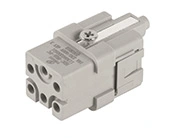
Yes. Advanced heavy-duty connection blocks feature modular, mixed-pin inserts. This allows a single blind-mate connector block to safely transfer high-current DC power alongside low-voltage battery management system (BMS) signal lines.
For utility-scale containerized BESS installations, you should select connectors that carry recognized international compliance certifications, specifically UL 4128 (the dedicated standard for BESS connections), TUV, and CE marks.
 English
  日本語
日本語  Deutsch
  ไทย
ไทย  русский
  العربية