𐄀 Technology Connection to Future


A railway axle counter is a train detection system used to determine whether a defined section of railway track is occupied or clear. Instead of relying on the electrical condition of the rail itself, an axle counter detects train axles at specific points along the track and evaluates the number of axles entering and leaving a section.
This principle has made axle counters an important technology in railway signaling. They can be applied to mainline railways, metro systems, station areas, level crossings, depots, and other locations where dependable train detection is required. A modern digital axle counter for railways combines trackside detection sensors with electronic signal processing, axle-counting equipment, communication interfaces, and signaling or interlocking systems.
For railway operators and system integrators, understanding how these elements work together is important when selecting equipment. The performance of an axle counter depends not only on the detection sensor, but also on installation, environmental conditions, signal processing, system configuration, maintenance, and integration with the wider signaling system.
The basic function of a railway axle counter is relatively simple. A defined track section has detection points at its boundaries. When a train passes the entrance detection point, the system records the axles entering the section. When the train passes the exit detection point, the axles leaving the section are recorded as well.
The evaluation equipment compares the incoming and outgoing axle information. When the required conditions are satisfied, the system can determine that the train has cleared the section. If the detected information does not correspond, the section is not treated as clear and remains in the applicable occupied or fault state according to the signaling system's configuration.
This approach is fundamentally different from a track circuit. A track circuit detects occupancy through the electrical characteristics of a section of rail, while an axle counter detects the physical passage of wheels or axles at predetermined locations. Because the two technologies use different detection principles, infrastructure conditions and project requirements play an important role in deciding which solution is appropriate.
EN 50617-2 addresses technical parameters for axle-counter-based train detection systems and describes the use of axle information from detection points to establish the clear or occupied condition of a train-detection section. The standard also considers factors such as installation, sensor positioning, cabling, rail connections, wheel conditions, and maintenance.
In this sense, a railway axle counter should be viewed as a complete train detection system rather than simply a sensor mounted on a rail. The detection head is only the point at which information enters the system; the final occupancy decision is produced through the coordinated operation of the detection, processing, counting, and signaling functions.
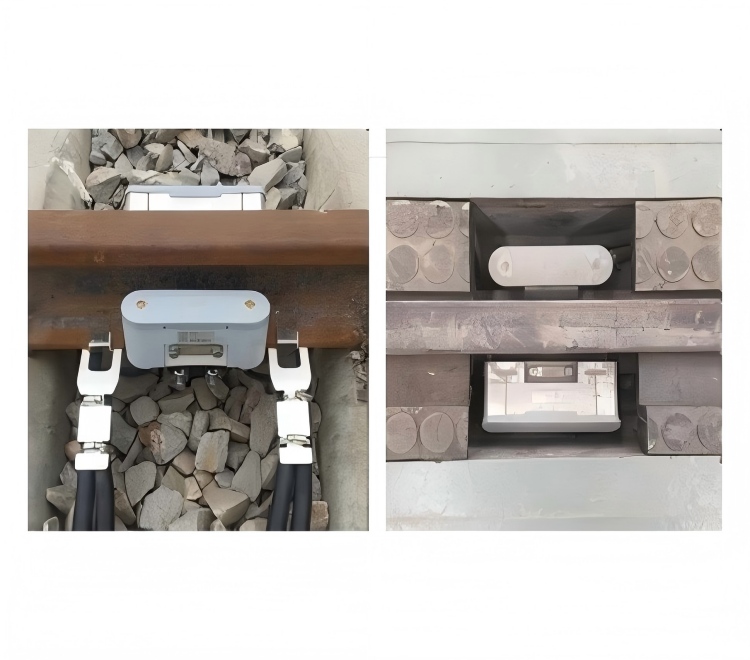
The detection process begins when a railway wheel approaches the sensor installed on the rail. Depending on the technology used, the sensor generates a change in its electrical or electromagnetic characteristics as the wheel passes. The resulting signals are processed by the axle counter electronics to determine whether a valid wheel or axle event has occurred.
A digital axle counter for railways then processes these detection signals to establish information such as axle passage and direction. The system can distinguish successive wheel events and use them to update the axle count associated with a particular detection point.
Direction detection is particularly important because the system needs to know whether axles are entering or leaving a monitored section. Detection heads commonly use more than one sensing element so that the sequence of signals can be analyzed. The exact sensing principle and signal-processing method depend on the manufacturer's design.
Yonggui Electric's YLJZ-F1, for example, uses a trackside sensor assembly connected to trackside electronic equipment and an indoor axle-counting host. According to Yonggui's published product information, the sensor uses two magnetic-core coils operating at different oscillation frequencies and is housed in a sealed enclosure. The manufacturer specifies an IP68 protection rating for the sensor used in this product.
The outdoor environment makes this part of the system particularly important. A sensor installed beside an active railway is exposed to water, dust, vibration, temperature changes, electromagnetic interference, and mechanical forces. Wheel and rail conditions can also influence the detection environment. Consequently, the physical installation of the sensor and the quality of its connection to the processing equipment are closely related to the overall reliability of the railway axle counter.

Although different manufacturers use different architectures, the major functional elements of a railway axle counter are broadly similar. The wheel detection sensor is installed at the rail and provides the initial detection of passing wheels. It is connected through field wiring to trackside electronics, which process the sensor signals and communicate the resulting information to the evaluation equipment.
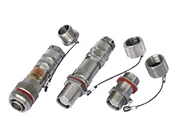
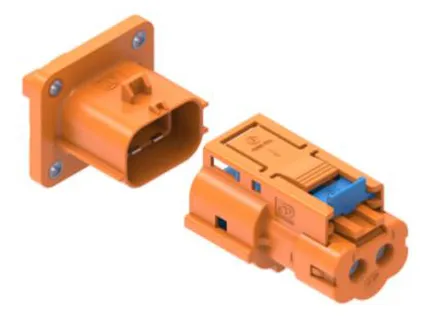
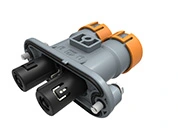
The junction box provides an important connection between the outdoor sensor installation and the system cabling. Its mechanical construction and environmental protection matter because it is exposed to trackside conditions while also providing a critical electrical interface.
In the YLJZ-F1 system, Yonggui Electric specifies a sealed composite junction box with an IP66 protection rating. These specifications apply to the particular Yonggui product and should not be interpreted as universal specifications for railway axle counters from other manufacturers.
The trackside electronic unit sits between the sensor and the indoor evaluation equipment. Depending on the system architecture, it may perform signal conditioning, detection processing, communication, and other functions before transmitting information to the central counting equipment.
The indoor evaluation unit is responsible for the higher-level counting and section evaluation logic. It receives information from one or more detection points and determines the corresponding track status. Modern digital systems may also incorporate diagnostic functions that allow maintenance personnel to monitor equipment conditions and identify abnormal operation.
Yonggui Electric's published YLJZ-F1 configuration includes axle-counting boards and a diagnostic board in the indoor host. The manufacturer states that one host can connect to up to 31 outdoor axle-counting points and control up to 31 track sections. These figures describe the YLJZ-F1 configuration and are not general capacity limits for all digital axle counter systems.
| Component | Function | Typical Position |
|---|---|---|
| Wheel detection sensor | Detects passing wheels and generates detection signals | Railside |
| Junction box | Provides a protected connection between field equipment and cables | Trackside |
| Trackside electronic unit | Processes signals from the detection sensors | Trackside |
| Evaluation unit | Counts axles and evaluates track section status | Equipment room |
| Communication and signaling interface | Transfers train detection information to signaling or interlocking equipment | System level |
The most important concept behind a railway axle counter is the comparison of axle information at the boundaries of a defined track section.
Imagine that a train enters a section through the first detection point. Every detected axle contributes to the entrance count. When the same train reaches the second detection point, the outgoing axles are counted. The evaluation system compares the two sets of information rather than relying on a continuous electrical connection through the track.
If the required incoming and outgoing axle information corresponds, the system can establish that the train has cleared the section. If the information does not correspond, the system does not simply assume that the track is empty. Depending on the system design and operating rules, the section may remain occupied or require a defined reset or recovery procedure.
This is one reason why axle counters are closely connected with railway safety systems. The occupancy indication generated by the axle counter can be used by interlocking and signaling equipment when determining whether routes or other train movements can be permitted.
For a digital axle counter for railways, the electronic processing layer is particularly important because the system must convert physical wheel movements into reliable digital information. The design therefore has to account for signal quality, direction, wheel characteristics, environmental influences, communication integrity, and abnormal conditions.
An axle counter also does not continuously report the exact position of every vehicle between two detection points. It establishes the status of the defined section based on information collected at its detection points. The way those sections are designed therefore needs to match the railway's operating concept and signaling architecture.
The flexibility of axle-based train detection allows railway axle counters to be used in many different railway environments. On conventional railways, they may be used for block-section detection or station approaches. In urban rail systems, they can support train detection in selected sections of metro or tram infrastructure. They can also be used around depots, yards, level crossings, and other locations where the signaling system needs dependable information about train presence.
One practical advantage is that the detection equipment is concentrated at defined points rather than requiring the entire monitored section to function as a track circuit. This can influence project design, especially in areas where track-circuit installation would be technically or economically less suitable.
However, axle counters are not automatically the right solution for every railway project. Engineers need to consider rail and wheel characteristics, operating speed, environmental conditions, section layout, signaling interfaces, maintenance resources, applicable standards, and the required safety architecture before selecting a system.
This system-level approach is also relevant when evaluating the wider railway equipment portfolio from Yonggui Electric. The company's railway products include axle-counting solutions alongside railway connection and related equipment, allowing project teams to consider train detection within the broader railway infrastructure rather than as an isolated component. More information is available through Yonggui Electric's railway and industrial product portfolio.
For projects involving a new installation, system replacement, or railway signaling integration, discussing the actual operating conditions with the manufacturer can also help clarify sensor configuration, section capacity, interfaces, environmental requirements, and commissioning considerations. Yonggui Electric provides a direct contact channel for project and technical inquiries.
Reliability in a railway axle counter starts with the physical installation. The detection sensor must be correctly positioned and securely mounted, while cables and junction boxes need appropriate protection from the railway environment. Even a sophisticated digital evaluation system cannot compensate for an incorrectly installed or poorly maintained detection point.
Regular inspection is therefore an important part of axle-counter maintenance. Maintenance personnel may need to check the condition and position of detection sensors, mounting hardware, cables, connectors, junction boxes, trackside electronics, and indoor equipment. Diagnostic information can further assist in identifying abnormal signals or equipment faults before they develop into larger operational problems.
Environmental protection is another important consideration. Trackside equipment must be selected according to the temperature, humidity, water exposure, vibration, dust, electromagnetic environment, and other conditions expected at the installation site. Protection ratings are product-specific, so project engineers should verify the actual rating of every component rather than assuming that all railway axle counter equipment provides the same level of protection.
Safety requirements should also be considered at the system level. Train detection is a safety-related function, and the applicable standards depend on the railway application and the architecture into which the axle counter is integrated. EN 50617-2 addresses technical parameters associated with axle-counter train detection, while the wider railway safety and RAMS framework includes standards such as EN 50126, EN 50128, and EN 50129.
Yonggui Electric states that its quality and railway-related management framework includes certifications such as ISO 9001 and ISO/TS 22163, with CRCC certification also identified in its company materials. Certification scope and applicability should always be verified against the specific product, configuration, and railway project before procurement.
For buyers, the most useful evaluation is therefore not simply whether a product is described as a “digital axle counter.” The more important questions concern detection performance, environmental suitability, system architecture, signaling interfaces, diagnostics, applicable standards, installation requirements, maintenance procedures, and the manufacturer's ability to provide engineering and commissioning support.
A railway axle counter detects train wheels at defined points, converts those detection events into axle information, and uses the information to establish the status of a railway section. Its operation depends on the coordinated performance of the sensor, trackside electronics, cabling, evaluation equipment, communication interfaces, and signaling system.
The development of digital processing has made the digital axle counter for railways a flexible solution for many train detection applications. At the same time, its reliability cannot be separated from installation quality, environmental conditions, maintenance, system integration, and railway safety requirements.
For railway operators and system integrators, selecting an axle counter is therefore a system-engineering decision rather than a simple component purchase. Understanding the complete detection chain makes it easier to compare technical solutions, define project requirements, and choose equipment that fits the intended railway application. Yonggui Electric's railway product portfolio provides one option for organizations evaluating axle-counting and related railway infrastructure technologies.
A railway axle counter is a train detection system that detects and counts train axles at defined track points to determine whether a monitored railway section is occupied or clear.
Trackside detection sensors identify passing wheels or axles. The electronic system processes the resulting signals and uses the detected axle information to determine train movement and section status.
A digital axle counter for railways uses digital electronic processing to evaluate wheel-detection signals, count axles, determine section occupancy, provide diagnostic information, and interface with railway signaling equipment.
An axle counter determines train presence by detecting axles at defined points, while a track circuit determines occupancy through the electrical condition of the track circuit. The suitable technology depends on the railway infrastructure and signaling requirements.
A typical system includes wheel detection sensors, trackside electronic equipment, junction boxes and cables, an indoor evaluation unit, communication interfaces, power equipment, and connections to signaling or interlocking systems.
Maintenance generally involves inspecting detection sensors, mounting arrangements, cables, junction boxes, electronic equipment, and diagnostic information. The exact procedures and intervals should follow the manufacturer's maintenance documentation and the requirements of the railway infrastructure manager.

 English
  日本語
日本語  Deutsch
  ไทย
ไทย  русский
  العربية