𐄀 Technology Connection to Future
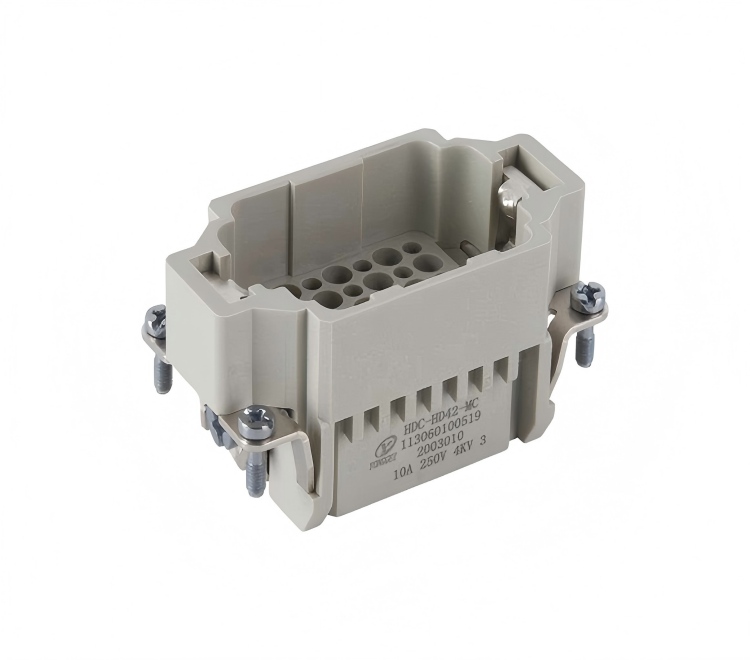


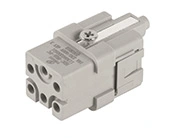
Not every connector that fits an electrical system is the right connector for it. A rectangular connector must match the electrical load, contact arrangement, mechanical structure, installation space, and operating environment of the equipment. These requirements become even more important when the connection must remain stable under vibration, temperature changes, moisture, or continuous electrical loading.
Understanding different rectangular connector types makes it easier to identify the specifications that matter for a particular application. From electrical ratings and contact materials to mechanical durability, environmental resistance, installation, reliability, and cost, each factor can influence the long-term performance of rectangular electrical connectors.
Electrical performance should be one of the first considerations when comparing rectangular electrical connectors. Rated voltage and rated current must be compatible with the circuit under its intended operating conditions. Engineers should also check contact resistance, insulation resistance, and dielectric withstand voltage.
Contact resistance affects electrical losses and heat generation at the connection point, while insulation resistance helps maintain electrical isolation between contacts. Dielectric withstand voltage indicates the connector's ability to tolerate a specified test voltage under defined conditions.
For example, Yonggui's 141054 rectangular electrical connector is specified with up to 4 pins, a 100 A rated current, a 1000 V DC rated voltage, a 2000 V AC withstand voltage, contact resistance of no more than 1 mΩ, and insulation resistance of at least 1000 MΩ under stated test conditions. These specifications apply to that specific product and should not be generalized to every connector.
When comparing rectangular connector types, consider overall dimensions, mounting dimensions, contact spacing, cable-entry direction, and the clearance required for mating and maintenance.
Pin count should correspond to the number and type of circuits required, including power, signal, control, grounding, or auxiliary connections. Higher contact density can consolidate multiple circuits into one connector, but it may also increase connector size and wiring complexity.
Contact configuration is equally important. Some applications require different contact sizes for power and signal transmission, while others may require dedicated grounding or auxiliary contacts. Keying and polarization can also help prevent incorrect mating.
Contact material and surface plating influence conductivity, corrosion resistance, mating durability, and long-term connection stability. The appropriate choice depends on current requirements, operating temperature, mating frequency, humidity, corrosion exposure, and compatibility with the mating contact.
A connector that is frequently disconnected for maintenance may require different contact characteristics from a permanently installed connection. Plating should therefore be selected according to the manufacturer's technical specifications rather than appearance alone.
Yonggui's published product information includes gold-plated crown-spring socket accessories for its 141054 connector family, demonstrating how contact construction and surface treatment can be designed for specific requirements.
Electrical ratings alone cannot determine connector reliability. Rectangular electrical connectors should also withstand the mechanical conditions expected during installation and operation, including vibration, shock, cable movement, and repeated mating.
The locking mechanism should help prevent unintended separation, while contact retention keeps contacts correctly positioned inside the housing. Mating durability is particularly important when connectors are frequently disconnected during maintenance.
Mounting method, connector orientation, cable outlet direction, and available clearance should also be evaluated during equipment design. Yonggui's D Series specifications, for example, list connection durability of 500 cycles for the stated series together with specified electrical, environmental, vibration, and mechanical characteristics.

Environmental conditions can significantly affect connector service life. Before selecting among rectangular connector types, define the temperature, humidity, water exposure, dust, chemicals, corrosion, vibration, and shock that the connector may encounter.
Temperature ratings should cover both normal operation and foreseeable extremes. Moisture protection is especially important for outdoor, railway, transportation, and industrial equipment. Material compatibility should also be checked when connectors may be exposed to oils, solvents, cleaning agents, or other contaminants.
Environmental and mechanical stresses often occur together. Yonggui's D Series documentation specifies a working temperature range of -65°C to +165°C for the stated series, along with vibration and other mechanical requirements. These values apply to the specified series and should not be assumed for other products.
The right connector needs to fit not only the electrical design but also the way the equipment will be assembled, installed, inspected, and maintained. Termination method, mounting method, cable routing, connector orientation, and serviceability should therefore be considered before selecting rectangular electrical connectors.
Depending on the application, connections may use crimping, screw termination, soldering, welding, or factory-assembled cable solutions. The chosen method should match the conductor size, production process, and required electrical performance.
Yonggui offers connector solutions for new-energy vehicles, energy storage, telecommunications, railway systems, and industrial equipment. Engineers comparing rectangular connector types can review the Yonggui product portfolio to compare available connector families and application options.
The purchase price is only one part of connector cost. Assembly time, maintenance, replacement frequency, downtime, testing, supply continuity, and expected service life should also be considered.
Reliability should be evaluated using documented specifications such as mating durability, vibration performance, temperature range, contact resistance, insulation performance, and environmental resistance. Applicable compliance and qualification requirements should also be confirmed for the specific product and application.
Supplier manufacturing capability, quality management, testing, technical documentation, customization support, and supply capacity can influence long-term project reliability. Yonggui states that its new-energy and vehicle connector operations use an IATF 16949-based quality system together with VDA and MES-related process controls and electrical performance testing.
For application-specific requirements, engineers can provide their voltage, current, contact configuration, environmental conditions, and installation requirements when they contact Yonggui for technical support.
| Factor | What to Check | Why It Matters |
|---|---|---|
| Electrical rating | Voltage, current, contact resistance, insulation resistance | Ensures suitable electrical performance |
| Size and pin count | Dimensions, contacts, spacing, wire size | Ensures system and installation compatibility |
| Contact system | Material, plating, contact force | Affects conductivity and durability |
| Mechanical performance | Locking, retention, vibration, mating cycles | Supports connection stability |
| Environment | Temperature, moisture, dust, chemicals | Supports long-term performance |
| Installation | Termination, mounting, routing, serviceability | Improves assembly and maintenance |
| Reliability and cost | Quality, compliance, lifecycle, availability | Helps manage long-term project cost |
Selecting rectangular electrical connectors should be approached as an engineering decision rather than simply a purchasing decision. The connector needs to satisfy electrical, mechanical, environmental, installation, compliance, and lifecycle requirements simultaneously.
Start with voltage, current, contact configuration, dimensions, and installation space, then evaluate materials, mechanical durability, environmental conditions, termination, reliability, compliance, and total cost. A systematic approach makes it easier to compare rectangular connector types and reduce the risk of compatibility problems, premature failure, and costly redesigns.
They connect power, signal, control, and grounding circuits in industrial, railway, automotive, energy storage, telecommunications, and other electrical applications.
Define the required voltage, current, contact count, dimensions, wire size, environment, installation method, and compliance requirements, then compare suitable products.
Contact resistance affects electrical losses and heat generation. A suitable contact system helps maintain stable electrical performance within its specified conditions.
Consider temperature, humidity, water, dust, chemicals, corrosion, vibration, and shock based on the actual operating environment.
No. Pin count should match the required circuits. More contacts can consolidate connections but may increase size and installation complexity.
Some manufacturers offer customized connector solutions, including contact configuration, termination, cable assembly, or mounting. Requirements should be discussed with the manufacturer before final approval.



 English
  日本語
日本語  Deutsch
  ไทย
ไทย  русский
  العربية