𐄀 Technology Connection to Future
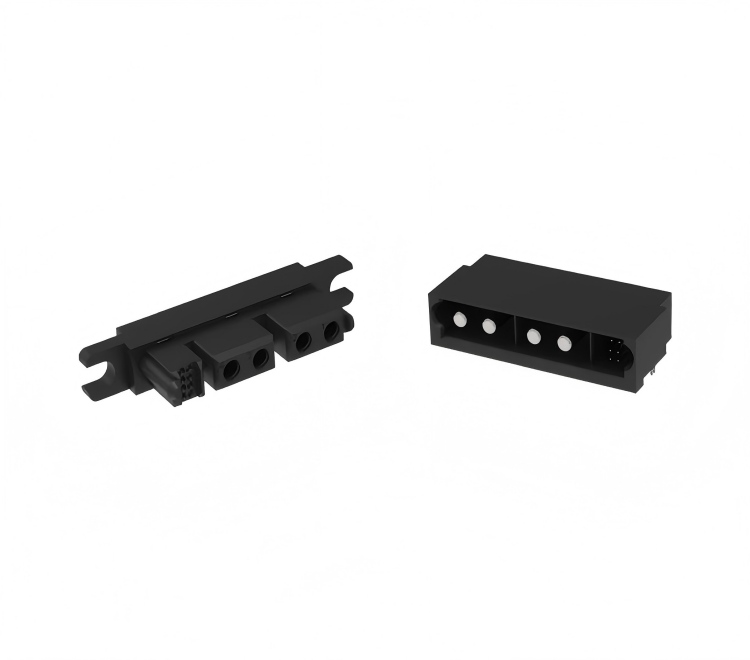


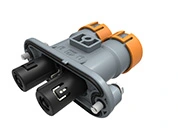
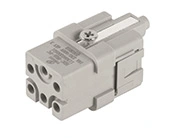
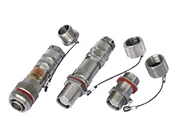
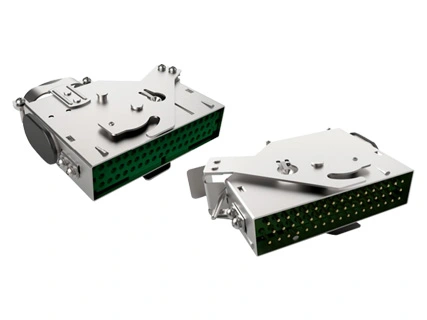
Telecom connectors are small components, but their influence on network reliability is much larger than their size suggests. A connector sits between cables, equipment, modules, or network interfaces, and its electrical and mechanical condition directly affects the quality and stability of the connection. In telecom infrastructure, where connections may remain in service for years, connector performance is not simply a matter of whether two conductors are physically joined. It also depends on contact resistance, signal integrity, mechanical stability, environmental protection, and long-term durability.
Understanding these factors is particularly important when comparing different telecom connector types. Connectors designed for indoor equipment may have very different requirements from connectors used in outdoor cabinets, base stations, fiber-optic infrastructure, or harsh industrial environments. The right choice depends on the application, cable structure, installation environment, required mating cycles, and electrical or optical performance requirements.
This article examines what determines telecom connector performance, why contact resistance and signal loss matter, how connectors change with use, and what engineers should consider when selecting and deploying telecom connectors.
A high-performing telecom connector should maintain a stable connection under its intended electrical, mechanical, and environmental conditions. In practical terms, that means the connector should provide consistent contact between mating components, maintain the required signal characteristics, resist mechanical movement, and remain functional throughout its expected service life.
For power-carrying telecom connections, contact resistance is one of the most important electrical characteristics. When resistance at the contact interface increases, more electrical energy is dissipated as heat. Excessive or unstable contact resistance can therefore contribute to local heating, voltage drop, and unreliable operation. In signal applications, the problem may appear differently: changes in the contact interface can increase attenuation, reflection, interference, or intermittent signal behavior.
Mechanical performance is equally important. A connector may have excellent initial electrical characteristics but still perform poorly if vibration, cable movement, repeated mating, or insufficient retention causes the contact interface to become unstable. This is why connector performance needs to be evaluated over the complete service life rather than only under initial laboratory conditions.
Good telecom connectors are therefore designed as complete mechanical and electrical systems. Contact geometry, plating, spring force, housing design, locking mechanisms, sealing, and manufacturing tolerances all contribute to the final performance of the connection.
Contact resistance is determined by what happens at the actual mating interface. Although two metal surfaces may appear smooth to the eye, their microscopic surfaces contain irregularities. Electrical current flows through the effective areas where the surfaces make contact. Contact force, surface condition, material selection, plating, contamination, and mechanical stability can all influence the resulting resistance.
The contact material is consequently an important part of connector design. Copper alloys are widely used for conductive components because they combine electrical conductivity with useful mechanical properties. Surface finishes are then selected to provide the required balance of conductivity, corrosion resistance, wear resistance, and compatibility with the intended application.
Contact force also has a direct relationship with connector behavior. A properly designed contact must maintain sufficient force against the mating surface without creating excessive insertion and extraction forces. If contact force decreases over time because of material relaxation, wear, deformation, or environmental exposure, the electrical interface can become less stable.
The mechanical structure surrounding the contacts matters as well. A housing helps maintain alignment between mating components, while a locking mechanism prevents accidental separation. Strain-relief structures can reduce the mechanical load transferred from the cable to the contact area. These details are particularly important for telecom connectors installed in equipment that experiences vibration or repeated cable movement.
The variety of applications explains why there is no single universal connector design. Different telecom connector types are optimized for different combinations of current, voltage, frequency, density, mating requirements, environmental exposure, and installation method.
Signal transmission becomes more demanding as communication systems operate at higher frequencies and data rates. A connector is part of the overall transmission path, so its geometry and electrical characteristics can influence the behavior of the complete link.
In high-frequency applications, impedance continuity becomes particularly important. A change in geometry at the connector interface can cause part of a signal to be reflected instead of continuing through the connection. The resulting insertion loss and return loss depend on the connector design, frequency range, mating condition, cable characteristics, and the surrounding system.
For lower-frequency power or control connections, the main concerns may instead center on contact resistance, current capacity, temperature rise, and mechanical stability. This distinction is useful when evaluating telecom connector types, because a connector suitable for one electrical function may not be appropriate for another simply because the physical connection appears similar.
Connector design also needs to account for the transition between the cable and the contact system. Poor cable termination can undermine the performance of an otherwise well-designed connector. In a deployed network, therefore, signal quality depends on the complete assembly, including cable preparation, termination, connector geometry, installation technique, and mating condition.
For equipment manufacturers and telecom infrastructure providers, this is one reason connector selection should be made together with cable and system requirements rather than treated as an independent purchasing decision.

A connector's initial performance does not necessarily represent its long-term performance. Every mating and unmating operation produces some degree of mechanical interaction between the contact surfaces. Repeated cycling can gradually change the surface finish, contact geometry, and spring characteristics.
Wear becomes more relevant in applications where connectors are frequently serviced, reconfigured, or replaced. A connector used once during factory assembly may experience a very different mechanical life from a connector designed for repeated field maintenance.
Contact surfaces can also be affected by fretting. Small relative movements caused by vibration or thermal expansion can disturb the contact interface even when the connector remains physically mated. Over time, this movement may contribute to surface wear or oxidation and increase electrical instability.
For this reason, durability testing for telecom connectors commonly considers more than simple mating-cycle performance. Mechanical vibration, temperature changes, corrosion exposure, retention, and electrical continuity may all be relevant depending on the intended application.
The connector's locking system also becomes increasingly important over time. A secure mating mechanism helps prevent accidental separation and limits unwanted movement between the contact interfaces. In equipment subject to vibration, transportation, or repeated handling, mechanical retention can be just as important as the initial electrical specification.
Yonggui Electric develops and manufactures electrical connection products for industrial and transportation applications, including connector solutions used where reliable electrical interfaces are required. Its broader product portfolio can be reviewed through the Yonggui Electric products page, where different connection technologies and application-oriented products are presented.
The environment surrounding a connector can have a major effect on its service life. Moisture is one of the most obvious concerns because water can promote corrosion and, in some applications, create leakage paths or other electrical problems. Outdoor telecom infrastructure therefore requires substantially different environmental protection from equipment installed inside a controlled equipment room.
Temperature is another consideration. Materials expand and contract as temperature changes, and repeated thermal cycling can gradually affect mechanical interfaces and seals. Extreme temperatures can also influence contact materials, housing materials, cable jackets, and lubricants used in certain connector designs.
Dust and chemical contamination can create additional problems. Particles introduced into the mating interface may prevent proper contact, while corrosive substances can attack exposed conductive surfaces. Industrial or transportation environments may therefore require connector materials and sealing systems specifically selected for the surrounding conditions.
Vibration is particularly relevant to connectors installed in moving or mechanically active equipment. A connector needs sufficient retention and contact stability to withstand the vibration profile specified for its application. The required test conditions vary by industry and installation environment, so engineers should use the applicable product or system standard rather than relying on a generic vibration figure.
Ingress protection is another factor to examine for outdoor telecom connectors. IP ratings are defined by IEC 60529 and describe protection against solid foreign objects and water under specified test conditions. An IP rating should therefore be understood as a defined test classification, not as a guarantee that a connector will perform identically in every outdoor environment.
These environmental differences are also why comparing telecom connector types only by dimensions or nominal electrical ratings can be misleading. Two connectors may look similar while having very different sealing, material, retention, or environmental capabilities.
Connector evaluation should begin with the actual operating conditions. Engineers need to know what the connector is carrying, where it will be installed, how often it will be mated, what environmental exposure it will experience, and what maintenance access is available.
The following comparison illustrates how the most important performance considerations can change between common application categories.
| Application Category | Main Performance Concern | Important Connector Characteristics | Typical Environmental Consideration |
|---|---|---|---|
| Indoor telecom equipment | Stable electrical or signal connection | Contact resistance, signal integrity, retention, compact design | Controlled temperature and humidity |
| Outdoor telecom equipment | Long-term connection stability | Sealing, corrosion resistance, contact stability, mechanical retention | Rain, moisture, dust, temperature cycling |
| High-frequency communication equipment | Signal integrity | Controlled impedance, insertion loss, return loss, dimensional consistency | Depends on installation environment |
| Power-related telecom connections | Current carrying and thermal performance | Low contact resistance, current capacity, contact force, heat dissipation | Temperature rise and installation conditions |
| Frequently serviced equipment | Durability through repeated connection | Mating-cycle capability, wear resistance, locking mechanism | Handling, vibration, dust, maintenance conditions |
Laboratory testing provides the starting point, but deployment conditions should also be considered. A connector that passes an initial electrical test may behave differently after repeated mating, vibration, thermal cycling, or environmental exposure. For critical applications, qualification should therefore reflect the conditions the connector is expected to encounter during its service life.
During installation, cable preparation and termination deserve particular attention. The connector should be assembled according to the manufacturer's specified procedure, with appropriate control of stripping, crimping, insertion, locking, and sealing where applicable. Incorrect assembly can create high contact resistance or mechanical weakness even when the connector itself meets its design specification.
Inspection after installation can also identify problems before they affect the network. Depending on the application, this may involve checking connector engagement, locking condition, cable strain relief, visible damage, sealing interfaces, or electrical continuity. For more demanding systems, specialized electrical or signal-integrity testing may be appropriate.
For telecom equipment manufacturers and infrastructure integrators looking for application-specific connection solutions, working directly with the supplier can help clarify material selection, connector configuration, environmental requirements, and customization options. Yonggui Electric can be contacted through its technical and project inquiry page for product and application discussions.
The performance of telecom connectors is determined by the interaction of electrical, mechanical, material, and environmental factors. Contact resistance influences electrical efficiency and stability, while connector geometry and interface design can affect signal integrity. Mechanical retention, contact force, and wear resistance determine whether that performance can be maintained as the connector is used over time.
Environmental conditions add another layer of complexity. Moisture, corrosion, temperature cycling, dust, vibration, and repeated servicing can gradually change the condition of a connector and its contact interface. Selecting the appropriate connector therefore requires more than comparing dimensions or nominal electrical specifications.
The wide range of telecom connector types reflects these different requirements. Indoor equipment, outdoor infrastructure, high-frequency systems, power connections, and frequently serviced equipment may each require a different approach to connector design and qualification.
For manufacturers and telecom infrastructure operators, the most reliable selection process starts with the application itself. By matching contact design, electrical characteristics, mechanical retention, environmental protection, and expected service life to the actual operating conditions, engineers can build connection systems that remain stable well beyond initial installation.
Telecom connectors provide detachable or fixed electrical, signal, or equipment interfaces in communication infrastructure. They can connect cables, modules, equipment, power systems, and other network components.
Contact resistance affects electrical losses, voltage drop, and heat generation. An unstable or excessively high contact resistance can reduce connection reliability, particularly in power-carrying applications.
Important factors include contact material, plating, contact force, connector geometry, mechanical retention, cable termination, mating cycles, vibration, temperature, moisture, dust, and corrosion.
Telecom connector types differ in their electrical characteristics, physical configuration, signal requirements, mating method, environmental protection, size, and intended application. Selection should be based on the complete system requirement.
Yes. Repeated mating can gradually wear contact surfaces and affect plating, contact geometry, or spring force. Connectors intended for frequent servicing should therefore be evaluated for the required mating-cycle conditions.
Reliability can be improved by selecting connectors appropriate for the electrical and environmental conditions, using correct installation procedures, maintaining proper cable strain relief and locking, and inspecting connections according to the application requirements.


 English
  日本語
日本語  Deutsch
  ไทย
ไทย  русский
  العربية